Confessions of a London Escort: Real Stories from the Industry
Feb, 21 2026
Most people think of London escorts as glamorous, mysterious, or even dangerous. The truth? It’s just a job. A messy, unpredictable, exhausting, and sometimes deeply human one. I’ve been doing this for over eight years. Not because I wanted to be a star in a movie, but because I needed to pay rent after my degree left me with £32,000 in debt and no job offer. This isn’t a story about fantasy. It’s about survival, boundaries, and the quiet moments that no one talks about.
How It Actually Starts
You don’t wake up one day and decide to become an escort. At least, not most of us. For me, it was a Craigslist ad that said, "Flexible hours, good pay, no clients over 40." I replied out of boredom. Two weeks later, I had my first booking. No agency. No manager. Just a PayPal link and a WhatsApp number. That’s how it works for most independent escorts in London-no velvet ropes, no limos, no paparazzi. Just a flat in Clapham, a clean bed, and a list of rules you write yourself.
The real entry point? Reddit threads, private Facebook groups, and word of mouth. There’s no formal training. You learn by trial and error. One mistake-showing up late, missing a no-contact rule, trusting the wrong client-and you lose your reputation fast. Reputation is everything. A single bad review on a private forum can kill your business for months.
The Clients Are Not What You Think
People imagine wealthy CEOs, bored billionaires, or creepy old men in suits. The truth? My clients are teachers, nurses, baristas, single dads, and retired soldiers. One regular came every Tuesday at 7 p.m. for 45 minutes. He never talked. Just lay there, listening to jazz. After three months, he told me his wife had died two years earlier. He didn’t want sex. He wanted someone to sit with him in silence. I didn’t charge him that day.
Then there’s the guy who brought his own pillow. Said his wife hated when he traveled. Another brought a photo album of his kids and asked me to hold it while he cried. Most just want to be seen. Not as a customer. Not as a fantasy. As a person who’s tired, lonely, or scared.
Not all are like that. Some are rude. Some are drunk. One tried to record me without consent. I blocked him, reported him to the police, and changed my number. That’s why I keep a panic button under my pillow. It’s not a gimmick. It’s a necessity.
The Rules I Live By
You don’t survive long in this industry without rules. Here are mine:
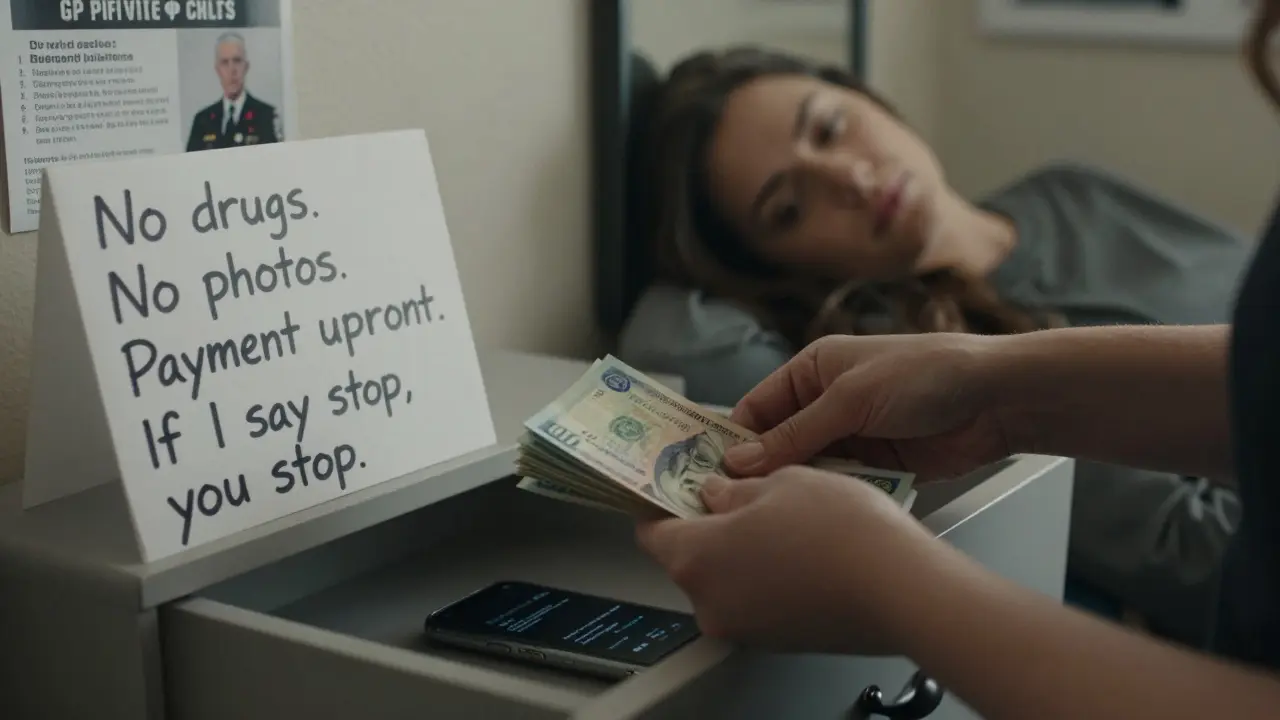
- No drugs. Ever. Not even one line. It’s not worth the risk.
- No alcohol before or during. I need to be sharp.
- No private addresses. All meetings are in vetted hotels or my own flat-no exceptions.
- No photos. No videos. No social media tagging. Ever.
- Payment upfront. Cash or bank transfer. No PayPal after the fact.
- Cancel with 24 hours’ notice or you pay 50%.
- If I say stop, you stop. No negotiation.
These aren’t suggestions. They’re survival tactics. I’ve seen girls get stalked because they let a client know where they lived. I’ve seen others get scammed because they trusted a "nice guy" who paid with a stolen card. You don’t get a second chance in this line of work.

The Hidden Costs
People think you make £1,000 a night and live in Mayfair. The reality? I pay £1,200 a month in rent for a one-bedroom in Zone 2. I spend £300 on cleaning services every month. £150 on laundry. £200 on self-defense classes. £80 on a VPN and encrypted messaging apps. £100 on a private GP because I can’t risk going to a NHS clinic.
Taxes? I file as self-employed. HMRC doesn’t care what you do. They just want the money. I save 30% of every payment. That’s the price of being invisible. No sick pay. No holiday. No pension. If I get sick, I lose income. If I get hurt, I’m on my own.
And the mental toll? That’s the heaviest cost. I see people at their most vulnerable. I hear their secrets. I hold their grief. I never talk about it-not to friends, not to family, not even to my therapist. I learned early: the only person who can carry this weight is the one who lived it.
Why I Still Do It
I could quit. I’ve saved enough to buy a small flat in Kent. I’ve been offered jobs in marketing, PR, even teaching. But I don’t. Why?
Because I’m good at it. Not because I’m sexy or charming. Because I’m reliable. Because I show up. Because I listen. Because I’ve turned a job that society shames into something that gives me control-over my time, my body, my income.
I’ve helped two clients through divorce. One through cancer treatment. Another through a suicide attempt. I didn’t fix their lives. But I gave them an hour where they didn’t feel alone. That’s worth more than any title or salary.
And yes, I’ve had bad days. Nights where I cried in the shower. Weeks where I thought about quitting. But I’ve never regretted the choice. Not because it’s easy. But because it’s mine.
What No One Tells You
There’s no uniform. No secret society. No underground network of spies or criminals. Just women-mostly women-trying to survive in a city that doesn’t care if you live or die, as long as you’re quiet about it.
The police don’t raid us. The media doesn’t interview us. The government doesn’t fund us. We’re invisible. And that’s the only protection we have.
So if you’re thinking about it? Don’t do it for the money. Do it only if you can live with the silence. If you can handle the judgment. If you can set boundaries so hard they don’t bend.
And if you’re just curious? Stop romanticizing it. This isn’t a Netflix show. It’s real life. With dirty sheets, unpaid bills, and quiet courage.
How to Stay Safe If You’re Considering It
If you’re thinking of stepping into this world, here’s what you need to know:
- Start with a trial run. Do one booking with a trusted friend nearby. Have them check in at 90 minutes.
- Use a separate phone number. Get a Google Voice or Burner app. Never use your real number.
- Never meet alone in your home. Use a hotel with a 24-hour front desk. Book under a fake name.
- Get tested every 3 months. Use a private clinic. Don’t risk your NHS record.
- Join a private forum. There are safe, moderated groups for London escorts. Ask for advice. Don’t Google it.
- Know your rights. In the UK, sex work is legal. Soliciting is not. But being an escort isn’t a crime. Know the difference.
And above all-trust your gut. If something feels off, walk away. Even if they pay double. Even if they beg. Your safety isn’t negotiable.
Is being an escort illegal in London?
No, being an escort is not illegal in London or anywhere in the UK. Selling sexual services between consenting adults is legal. What’s illegal is soliciting in a public place, running a brothel, or exploiting others. Independent escorts who work alone, set their own terms, and use private venues are operating within the law. The gray areas come from outdated laws around "kerb crawling" and public nuisance, but as long as you’re not causing a disturbance or advertising in public, you’re not breaking the law.
How much do London escorts actually earn?
Earnings vary wildly. Most independent escorts in London make between £400 and £1,200 per session. That’s not per week-it’s per booking. A full-time escort doing 3-5 sessions a week can earn between £6,000 and £15,000 a month. But that doesn’t mean profit. After taxes, rent, cleaning, insurance, and safety tools, net income usually lands between £3,000 and £8,000 a month. Top earners with a strong reputation and niche services can hit £20,000+, but those are rare. Most are just trying to cover rent and eat.
Do escorts have regular clients?
Yes, and they’re often the most important part of the job. Regulars aren’t just reliable income-they’re emotional anchors. Many escorts develop quiet, non-sexual relationships with regulars who check in weekly or monthly. Some clients become friends. Others are just consistent, respectful, and kind. These relationships are why many escorts stay in the industry long-term. It’s not about sex. It’s about stability.
Can you quit and go back to a "normal" job?
Absolutely. Many do. Some leave after saving enough. Others transition into related fields-counseling, writing, event planning, or even starting businesses that support sex workers. The stigma is real, but it’s not permanent. Employers don’t ask about your past unless you tell them. Most people who’ve left the industry say the hardest part wasn’t the work-it was the shame they felt from family or friends. Once you let go of that, moving on becomes easier.
Are there agencies in London?
Yes, but they’re not like the movies. Most are small, independent operations run by former escorts. They take 30-50% of your earnings and handle bookings, screening, and sometimes security. But many warn against them. Some are exploitative. Others are just poorly run. The most successful escorts I know work independently. They control their rates, their schedule, and their safety. If you do go with an agency, ask for references from current workers. If they’re afraid to talk, walk away.
Final Thought
There’s no hero here. No villain. Just a woman who chose a hard path so she could live on her own terms. If you think this is about sex, you’re missing the point. It’s about dignity. About autonomy. About surviving in a city that doesn’t make it easy for anyone-and especially not for women who don’t fit the mold.
Next time you see a woman in a coat and heels walking into a hotel at midnight, don’t assume. Don’t judge. Maybe she’s just trying to get through another day. And maybe, just maybe, she’s doing better than you think.